
Indian makhani paneer pizza
Makhani paneer pizza, documented from two Indian chains — Domino's India and Pizza Hut India — rather than invented: a butter-tomato-cream makhani sauce standing in for a plain tomato base, paneer, onion and capsicum, on a pan crust refrigerated for 12 hours.
Recipe by ThePizzaPlanet.com · Published
Essential tool for this bake
Makhani paneer pizza is not this site's invention — it is a standing menu line at two separate Indian pizza chains, and this recipe documents what those chains actually sell rather than guessing at an "Indian pizza" from imagination. Unlike tandoori paneer pizza, the style here is defined by a sauce rather than a topping. The crust underneath it is unrelated to the sauce's origin: a King Arthur Bread Flour pan build at 12.7% protein, refrigerated for 12 hours the way any pan dough is, because a fusion topping does not change what the dough needs to do. If the middle stays soggy under the sauce and cheese, a soggy middle covers the fix; if a loaded slice sheds its toppings when you lift it, see toppings sliding off; if the base comes out pale and floppy, see a pale, floppy base.
Where this comes from
Two companies brand a makhani/makhni sauce as the defining element of a pizza in India, which is the bar this site requires to call something a documented style rather than an invented one — the same bar every recipe in the fusion collection has to clear. This is one of three Indian fusion styles gathered at the India hub, alongside tandoori paneer and chicken tikka.
Domino's India sells "Paneer, Onion & Capsicum with Desi Makhani Sauce," described on its menu page: "Authentic Indian Flavor of Makhani Sauce loaded with juicy Paneer, crisp Capsicum and crunchy Onion." Pizza Hut India sells "Paneer Makhni Masala," its description reading: "Mozzarella Cheese, Masala Paneer, Onions, Green Chilli, Red Bell Pepper, Makhni Sauce, Mint Sauce Drizzle."
Domino's India has no per-product page for either pizza — its entire catalogue is inlined into the single /menu URL, with no product-detail route on the site at all, so that page is the only citation possible. Pizza Hut India's per-product pages are live (its Tandoori Paneer, for instance, also resolves at /menu/pizzas/tandoori-paneer-pan-personal), but the citation above uses the category listing /menu/pizzas instead, because that single page carries every size and crust variant and is the URL that was archived — an editorial choice, not an absence.
What both agree on: a branded makhani/makhni sauce as the defining element — not one ingredient among several unrelated ones — and onion as a fixed co-topping. What each names alone: Domino's names capsicum; Pizza Hut's Paneer Makhni Masala names green chilli, red bell pepper, and an explicit mint sauce drizzle that Domino's text does not mention for either of its Makhani-sauce products.
The pairing across two proteins at both companies is the evidence this is a sauce-defined style rather than one paneer item standing alone. Domino's also sells "Chicken Keema & Onion with Desi Makhani Sauce," described identically in structure: "Authentic Indian Flavor of Makhani Sauce loaded with meaty Chicken Keema and crunchy Onion." Pizza Hut sells "Keema Masala," described as "Mozzarella Cheese, Chicken Keema, Onion, Red Paprika, Green Capsicum, Makhni Sauce, Mint Sauce Drizzle." Both chains sell the same branded sauce across a paneer pizza and a chicken-keema pizza — a matched pairing at two companies, not two unrelated single items that happen to share a word.
Two traps in this menu data, handled rather than flattened. First, Domino's also uses "Makhani" as a crust name: its best-known pizza, Peppy Paneer, is sold on a "Creamy Makhani Cheese Burst" crust. A crust name is not a stated sauce ingredient, so Peppy Paneer is not counted as a third makhani-sauce product here, and it isn't one. Second, Pizza Hut sells a third, higher-tier item, "Mazedar Makhni Paneer," describing "our new flavourful makhni sauce" — wording that implies more than one makhni sauce formulation exists on Pizza Hut's own menu. The page does not say whether it replaces the sauce used on Paneer Makhni Masala and Keema Masala or sits alongside it. That is an open question in Pizza Hut's own text, left open here rather than resolved.
What makes it that style
Three decisions define this pizza, each grounded in what the two chains actually print:
- A butter-tomato-cream sauce standing in for a plain tomato base, not a topping added on top of one. Makhani is a tomato sauce finished with butter and cream, and both chains name that sauce — not the paneer or the vegetables — as the pizza's defining element. The fat and dairy blunt the tomato's acidity, so it reads as a rich, coating base rather than a bright one the way a plain tomato sauce does. That richness is also this pizza's biggest risk on a pan crust: sitting under cheese for 18 minutes, a full batch of reduced sauce oversaturates the crumb. Neither chain states how thick to reduce it or how much to spread — this recipe's own decision is to reduce it until it coats a spoon and use only about 100 g of it, thinly, saving the rest.
- Onion as the one agreed vegetable, with the rest attributed rather than merged. Domino's names capsicum alongside onion; Pizza Hut's Paneer Makhni Masala names green chilli and red bell pepper instead. Both are real, printed choices at their own chain — treating them as interchangeable would flatten a real disagreement into a false consensus, so capsicum goes into this build as Domino's choice, attributed as such.
- Mint sauce drizzle as Pizza Hut's finish alone. Pizza Hut's own text names it explicitly, on both the paneer and keema versions of this sauce line. Domino's text for its two Makhani-sauce products — paneer and keema — never mentions mint, mayo, or any drizzle. It goes into this recipe as an optional finish, not a default every version of this pizza carries.
If cutting into it sends the paneer and cheese sliding off the slice, toppings sliding off is the fix to check before blaming the sauce.
Flour: King Arthur Bread Flour (12.7% protein) — read the review
Dough Formula
| Ingredient | Grams | Baker's % |
|---|---|---|
| Flour (12.7% protein) | 218 g | 100.0% |
| Water | 131 g | 60.1% |
| Salt | 4.4 g | 2.0% |
| Yeast | 1.1 g | 0.5% |
| Oil | 11 g | 5.0% |
| Sugar | 4 g | 1.8% |
Makes 1 ball of ≈370 g
Ingredients
Dough
- Pizza dough (see formula above)1 ball
Makhani sauce
- Tomato — Crushed400 g
- Butter40 g
- Cream80 ml
- Ginger — Grated10 g
- Garlic — Minced3 cloves
- Kasuri methi — Crushed between your fingers2 g
- Garam masala4 g
- Saltto taste
Paneer
- Paneer — Cut into 2 cm cubes280 g
- Garam masalapinch
- Saltpinch
Toppings
- Low-moisture mozzarella — Shredded250 g
- Capsicum — Thinly sliced — Domino's ingredient, attributed; neither chain's text names a color70 g
- Red onion — Thinly sliced60 g
Mint sauce drizzle (optional — Pizza Hut's, not Domino's)
- Plain yoghurt60 g
- Mint leaves — Finely chopped15 leaves
- Lemon juice5 ml
- Saltpinch
Instructions
- 1
Whisk the yeast into the flour. Add water at 30-32°C (86-90°F), the oil and the sugar, and stir with a spatula until no dry flour remains.
- 2
Sprinkle the salt over the top and knead 5-6 minutes, by hand or machine, until the dough is smooth. A pan crust doesn't need the long development a same-day dough would — the cold ferment below does most of the work.
- 3
Cover the bowl and let the dough bulk ferment at room temperature for about 1 hour, until slightly puffy.
- 4
Oil the dough, transfer it to a tightly covered container and refrigerate for 12 hours.
💡 This is the ferment the calculator's Pan schedule is built on — the 15 h 18 min this page states is prep and cook time plus that schedule, not a rounding artifact. Skipping or shortening it leaves a dense, under-developed crust instead of a pan pizza's open, bready crumb.
- 5
While the dough is in the fridge, make the makhani sauce: melt the butter in a saucepan over medium heat, add the ginger and garlic and cook 30-60 seconds until fragrant, without letting the garlic brown. Stir in the tomato and garam masala.
- 6
Simmer the sauce uncovered, stirring occasionally, for 20-25 minutes, until it has reduced by roughly half and coats the back of a spoon rather than pooling off it. No chain publishes a makhani sauce recipe — this ratio and reduction target are standard makhani practice, not something scraped from a menu page.
- 7
Off the heat, crumble in the kasuri methi and stir in the cream. Season with salt to taste. Cool, cover and refrigerate alongside the dough until needed — this yields about 250 g of sauce, more than one pizza needs.
- 8
Toss the paneer cubes with a pinch of garam masala and a pinch of salt, cover and refrigerate alongside the dough and sauce until needed.
💡 Paneer doesn't melt the way mozzarella does — it holds its shape and warms through rather than flowing, so the cubes stay distinct under the cheese. Unlike the tandoori paneer version, this recipe does not sear it first: a makhani pizza wants the paneer soft and simmered in the sauce, not browned and chargrilled, so it goes on raw and cooks through in the oven instead. That's this recipe's choice, made for the sauce it sits in, not an inconsistency.
- 9
Take the dough out of the fridge — it should look puffy and have expanded — and let it sit while you oil a cast iron pan or sheet pan.
- 10
Press the dough into the pan, stretching and pushing it to the edges. If it springs back before reaching the corners, wait 10 minutes and press again.
- 11
Cover loosely and let the dough do its final proof in the pan at room temperature for about 1 hour, until doubled and puffy.
- 12
Heat the oven to 245°C (475°F) with a baking steel on the lowest rack for 45-60 minutes. The pan sits directly on the steel once it goes in.
- 13
Uncover the risen dough and spread only about 100 g of the makhani sauce thinly over the surface, leaving a bare rim. Save the rest of the sauce for another use.
💡 A rich, butter-and-cream sauce sitting under cheese for 18 minutes on a pan crust is a soggy-middle risk that a thin tomato sauce isn't — spreading the full batch is the mistake to avoid. Reducing it properly and using less than feels generous is this recipe's own decision, not something either chain states, because neither chain publishes how the sauce is applied to its own crust.
- 14
Scatter half the mozzarella over the sauce, then the seasoned paneer, the capsicum and the onion, and finish with the rest of the mozzarella.
- 15
Slide the pan onto the steel and bake 16-18 minutes, until the cheese is deep golden and the edges have pulled away from the pan. Rotate the pan halfway through if your oven runs hot on one side.
- 16
If using the mint sauce drizzle, stir the yoghurt, mint, lemon juice and salt together. Rest the pizza 3-4 minutes in the pan, then finish with a crosshatch drizzle of the mint sauce, or serve as is. Slice and serve.
Tips
- →The dough goes into the fridge as one piece for 12 hours before it is pressed into the pan — matching the site's calculator schedule for Pan, not a same-day sequence.
- →Reduce the makhani sauce until it coats a spoon, then use only about 100g of it, thinly spread. The rest of the batch is more sauce than one pizza needs and more than the crust can carry.
- →Mint sauce drizzle is Pizza Hut's finish, not Domino's — leave it off for a plainer match to Domino's makhani-sauce pizzas.
Video by Kitchen Flames · 3.6K views · 11 min · on YouTube
Shop this bake
Flour

King Arthur Bread Flour
The first bag to buy if you bake in a domestic oven. At 12.7% protein with added amylase on the label it gives you chew and colour at 250 °C, which is exactly what an unmalted 00 will not.
Check price on Amazon →Read the review →Ingredient

Polly-O Low Moisture Whole Milk Mozzarella
Thick enough to cube for a Detroit rim, where shreds burn to lace — and four ingredients against a coating of rice flour, cellulose and natamycin that no bake removes.
Check price on Amazon →Read the review →Ingredient

SAF Instant Yeast
Instant, so it goes in dry with the flour: no warm-water step means no step at which the yeast can be cooked, which is where an active-dry dough most often dies.
Check price on Amazon →Read the review →Equipment
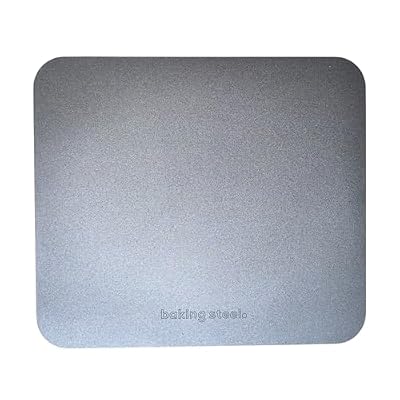
Original Baking Steel
6.4 mm is the home compromise: enough stored heat to bake two pies back to back, in a slab that will never crack the way a cordierite stone eventually does.
Check price on Amazon →Read the review →Equipment

Greater Goods Single Sensor Baking Scale
One model behind one listing, on the maker's own page: 5 kg (11 lb) of capacity, reading down to 1 g. What the listing sends is what the maker documents — rarer here than it ought to be.
Check price on Amazon →Read the buying guide →
If this goes wrong
Pizza base is soggy in the middle
Not enough heat is reaching the centre of the base fast enough to drive the water out before the crust sets. Bake on a fully preheated steel or stone rather than a tray, give it 45–60 minutes at maximum, and cut the water you put on top.
Toppings slide off when slicing
Molten cheese is a liquid and cannot grip anything until it cools back through roughly 55–65 °C (130–150 °F). Rest the pizza 2–3 minutes, cut down through it rather than dragging a wheel across it, and stop building a layer of oil and water between the cheese and the dough.
Pizza base is pale and floppy
The surface of your base never got hot enough for long enough to brown. Bake on a fully preheated steel at maximum, bake it longer than feels right, and switch to a malted bread flour or add 1–2% sugar so there is something there to brown.
More Pan Recipes
Try another recipe
We have 33 recipes across 7 pizza styles. Something didn't work? Check our troubleshooting guide.